
Active Warrants in Denver County
An active warrant in Denver County is simply one still enforceable when you check it. Denver County Court favors the words "outstanding," "warrant," and "address warrant" in its public materials. The true status could instead be served, recalled, canceled, quashed, stayed, or under a judicial order. Trust the source's wording and date. The Denver Sheriff Department posts no full public active-warrant roster. Denver Police does not either. Their restricted records can outrun a public docket on freshness, yet they are not open search tools. When the portals fall short, a public fallback chain remains. Denver County Court's portal, the Bonding & Warrants Division, the issuing clerk, counsel, and a properly scoped records request carry you the rest of the way.
Denver's 2024 Warrant Flow
Denver County Court's 2024 Annual Report gives the clearest dated picture. It logged 26,606 warrant entries and 19,861 clearances that year. At year-end it counted 52,146 outstanding warrants and protection orders. That figure blends two things. Read it as a combined category, never as 52,146 people or criminal arrest warrants.
These figures measure flow and inventory. They say nothing about current status. Denver County's general Bonding & Warrants page has used rough counts of 45,000 or 50,000 in other contexts, and those page-date estimates cannot be merged into a new current number.
How the Denver County Active Warrant List Works
No single Denver County list exists to search. The Post Bond - Address Warrant page takes a first and last name with date of birth, or a case number, and returns only online-bond-eligible results. Case Quick Search works from a case number or arrest booking number. Future-date search needs a full name and birth date. The docket tool pulls by courtroom and date. Each tool does one narrow job. An empty bond result does not prove no warrant exists. A future hearing does not prove every warrant is recalled. A docket is not an outstanding-warrant inventory. The DSD custody search says only whether someone is held in its custody now; it cannot rule out a non-custodial or out-of-county warrant, so match the exact Denver court, case identifier, birth date, and source date before trusting a possible match.
Denver County Warrant Record Requests
When the portal tools cannot settle a status question, request the existing court record. Denver County Court's DCC data and CCJRA page lays out the channels, estimates, fees, timing, electronic copies, and limits on custom compilations. Review Denver County Court's official record-request instructions.
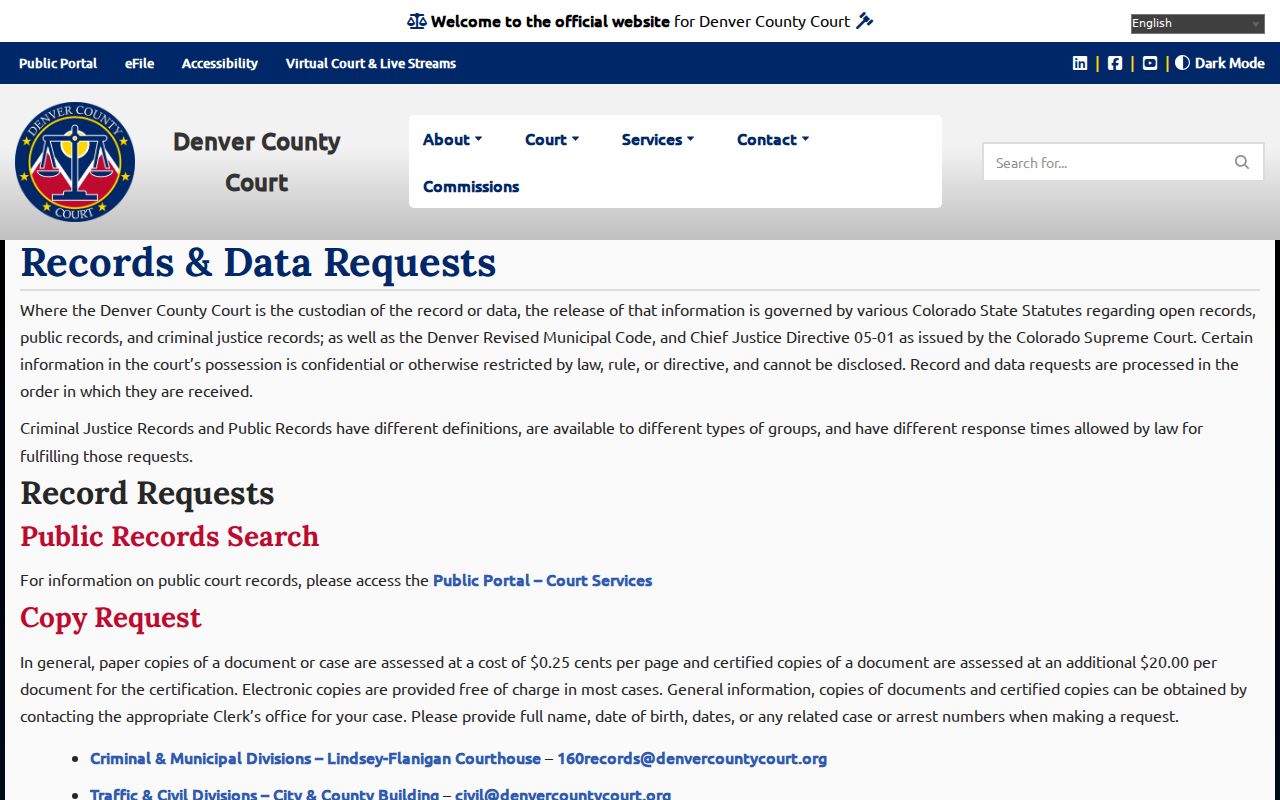
That page helps you describe an existing case record. It does not oblige the court to build a custom active-warrant list it does not keep. A valid case number speeds record-of-actions and document access in Denver County. Even then, court records can be sealed, limited, redacted, or withheld under court rules.
What an Active Warrant Shows
Read a Denver County active warrant record field by field. Public results can omit restricted details, so not every row shows up in every case.
| Case number | The stable court identifier, shown here only as synthetic 2026-GS-01427. |
|---|---|
| Court | Denver County, District, Juvenile, another county, or federal jurisdiction. |
| Warrant label | Arrest, bench, address, municipal, traffic, civil, or the source's exact term. |
| Issued date | The issue date when public, not proof of present status by itself. |
| Status | Active, served, recalled, canceled, quashed, stayed, or another official label. |
| Bond | Cash, personal recognizance, surety, conditions, amount, or judicial review. |
| Next hearing | Date, room, event, and docket status when available. |
| Access limit | Seal, juvenile rule, protected data, or restricted CCIC/NCIC information. |
An arrest record in Denver County holds the police's initial information, not the case's final outcome, so check the court record for the result.
Denver County Warrant Record Boundaries
The Denver Sheriff Department runs detention, court security, transport, extradition, and fugitive work, but it publishes no public roster of every active warrant. The public-record route to a sheriff record in Denver County is electronic and follows the Colorado Criminal Justice Records Act for criminal-justice material, with other records handled under the applicable framework. Fees, exclusions, identification needs, and response timing all turn on the request itself. The DSD public-records page lists those limits and how to submit.
An agency request can surface an existing Denver County sheriff record. It cannot turn restricted CCIC, NCIC, CJIS, juvenile, victim, or personal-identifier data into a public roster.
Denver Warrant Request Form
DSD links a direct electronic form for scoped requests. A strong Denver County request names the event, the date range, any known case or booking number, and the existing record sought. It should not ask for an unrestricted person search or a list that does not exist. Open the blank DSD electronic request form.
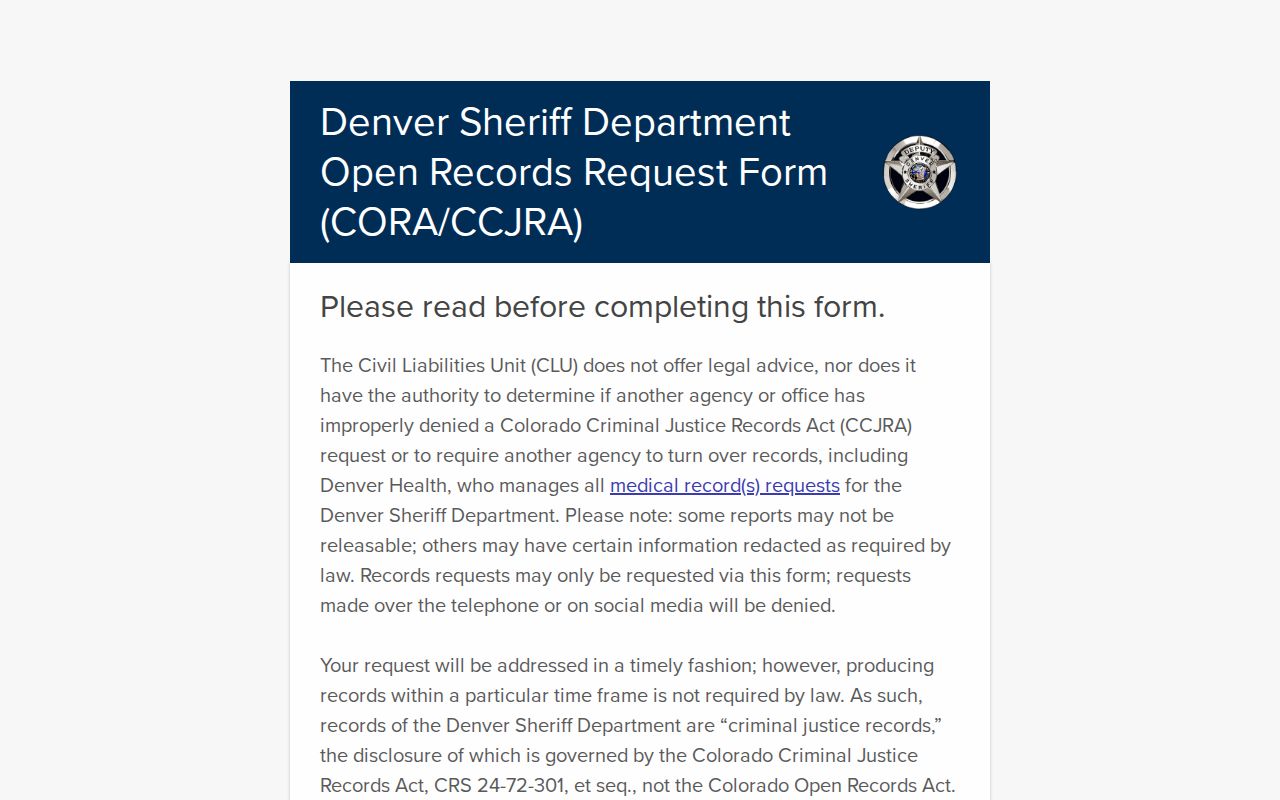
The blank form documents the safe submission channel. Never post a completed form, a private address, a birth date, or a named warrant match into public page content. DPD runs a different records process. Its limited in-person police-clearance query checks active warrants only in the City and County of Denver and excludes juvenile arrests and Denver Summons to Appear. That is an own-record service, not a statewide roster.
Most-Wanted Lists and Warrant Roundups
A most-wanted page is a call for tips, not a warrant list. Denver County active warrants run far past the few names a feature highlights. Metro Denver Crime Stoppers takes anonymous tips on selected matters. Still, a listing alone proves no current warrant, and an absence proves no clearance. Denver County also runs no universal amnesty day, no annual roundup, and no full-roster clearance event. For people facing municipal citations, Denver County offers Outreach Court, which helps eligible residents dealing with housing instability in a community setting. The AID Center adds offense-specific services and diversion pathways. Neither program works as automatic amnesty. The separate Denver County most-wanted reference explains the tip program and posts no names, photos, mugshots, or case tiles.
Denver County Warrant Payment Limits
The DCC payment portal warns that fines and costs may not be all you owe. A user can be told to post bond or clear an outstanding warrant first. Payment closes a case only when nothing else remains on the sentence. A payment plan, an appearance, a warrant, a bond, and a final disposition stay separate matters. Review the current Denver County Court payment terms.
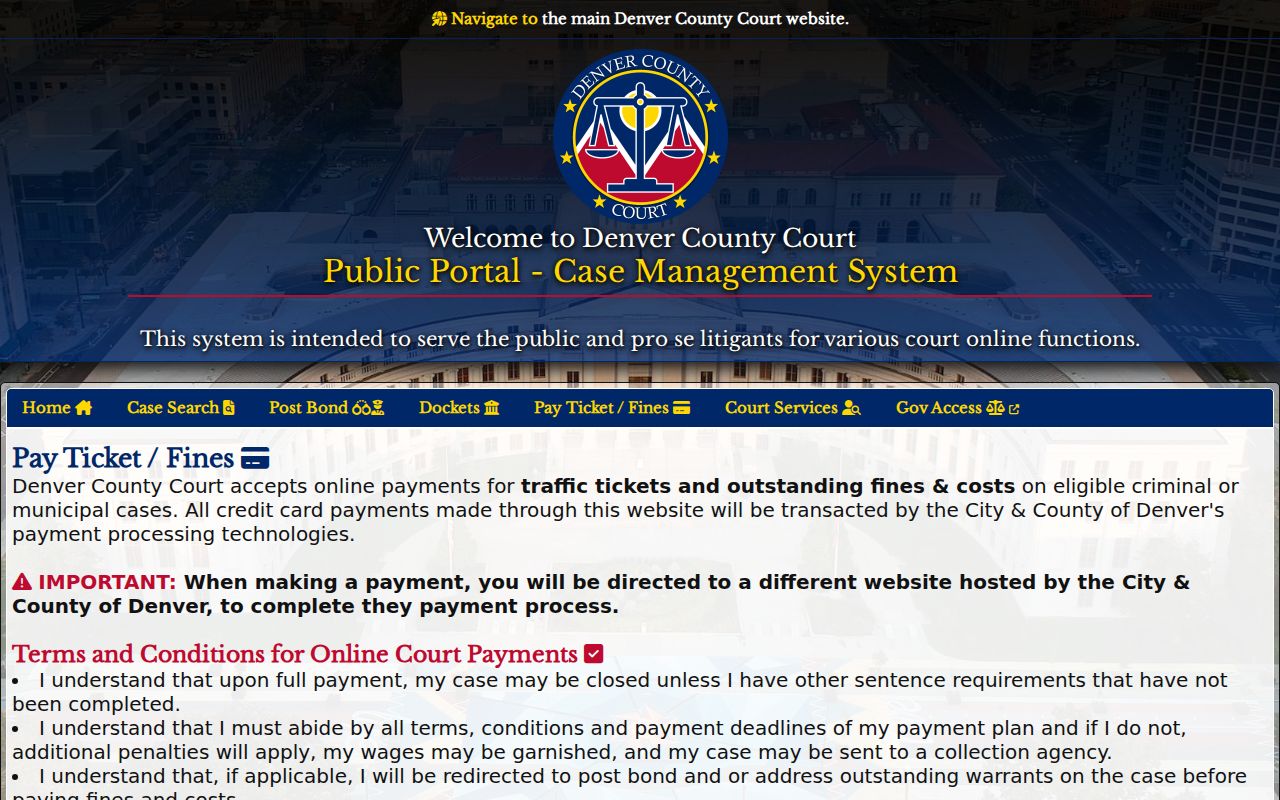
The portal handles eligible payments. It does not prove a warrant was recalled or another case closed. Online service sometimes goes down for maintenance or bounces you to a hosted payment provider, so open the live Denver County Court page every time you pay. Never rely on a saved link or an old fee notice. After an eligible payment, ask whether a hearing, sentence term, or warrant step still stands. Keep the receipt with the case number, court order, and next-hearing notice. If the status never updates, call the issuing clerk in Denver County rather than paying twice.
Payment warning: Denver officials do not call to demand fines or bond by telephone. Verify every payment through the court's published channel.
If Your Name Is on the List
If an official Denver source matches your name, stay calm. Do not confront police, dodge service, or wire money to a stranger who calls. Reach the issuing clerk or a lawyer through a published number. In a Denver County Court matter, ask what comes next: an appearance, online or in-person bond, a personal-recognizance bond, a judicial setting, or a motion to recall or quash the warrant. One phone call usually sorts the path.
- Record the source, date, court, and case number without republishing private details.
- Confirm the match with the issuing clerk or counsel.
- Ask which resolution path applies and whether online eligibility is limited.
- Attend every required hearing and meet separate case conditions.
- Keep orders, receipts, bond papers, and clerk instructions, then confirm the updated status.
Act promptly: A portal entry can lag. Use the issuing court or counsel to confirm the current warrant and safe next step.