
The Denver County Most Wanted Program
Denver County publishes no most-wanted roster from the Denver Sheriff Department or the Denver Police Department. That gap is not inactivity. Sheriff's deputies run fugitive, transport, detention, extradition, and court-security work for Denver County. Denver police verify warrants through restricted criminal-justice systems. Neither channel serves as a public warrant lookup. The public-facing partner in Denver County is Metro Denver Crime Stoppers. It is a nonprofit tip program. It is not Denver County Court, DPD, or DSD. The program spotlights selected cases and takes tips from the public. Its pages never confirm a Denver County warrant for a featured person, so status questions still go to the issuing court.
Denver Crime Stoppers Is Curated
Crime Stoppers picks a small set of cases for outreach. That is curation, not coverage. A featured item may simply seek information rather than flag an active warrant, and a court's status can shift after a post goes up. Denver County's official court record still controls.
- Curated program
- A selected public set chosen for outreach, not a complete database.
- Active warrant
- A warrant treated as enforceable in the issuing or authorized system at the time checked.
- Tip
- Information sent to the program for review, not a court filing or finding of guilt.
- Verification
- Official confirmation by a court or authorized law-enforcement system.
Send tips to the program, but take warrant-status questions to Denver County Court or the court that issued the warrant.
How the Lists Work
A most-wanted page is a curated handful. An active-warrant inventory is far larger. Denver County Court's 2024 report counted 52,146 outstanding warrants and protection orders at year-end. That combined figure was never published name by name. The court keeps no person-by-person compilation, and a records request cannot force one into being. Crime Stoppers pages also shift as cases develop. A listing date, a removal, or a blank tells you nothing certain about current warrant status in Denver County. An arrest record shows initial police information, not a final court disposition. Confirm the case through the Denver County Court Public Portal, the issuing clerk, or counsel. Felony and federal matters follow the District or federal route. Note: a case tile and a court warrant are different records kept for different purposes.
Denver Program Numbers in Context
Metro Denver Crime Stoppers posts aggregate program results, which anyone can read without identifying a person. The figures carry a May 13, 2024 update. They include 3,396 arrests, 5,855 cases cleared, 70,639 tips, and $1,355,700 awarded since 1981. Those are lifetime totals. A Denver County warrant count is a different question entirely. Denver County totals would come from the courts, not from tip-program history.
Dates and sources matter here. Aggregate history describes the tip program, not the accuracy of any Denver County profile.
How to Report a Tip Safely
Use the official program, not public posts. Denver County tips can go to Metro Denver Crime Stoppers by phone or online, anonymously. Its Spanish-language page explains the code and reward process.
- For an emergency or immediate danger, call 911. Do not use a web tip as an emergency dispatch request.
- For an anonymous Crime Stoppers tip, call 720-913-STOP (7867) or use the official online tip route.
- Give facts you directly observed. Do not approach, confront, or try to detain anyone.
- Retain the confidential code supplied by the program if you want to check follow-up or award eligibility.
- For non-emergency police contact, use DPD's published non-emergency number, 720-913-2000.
Safe tip rule: Send information only through a published official channel. Never publish a person's address, date of birth, or accusation yourself.
Denver Tip Program Interface
The Metro Denver Crime Stoppers site opens on its banner and public tip channel. No name, photograph, or mugshot is reproduced there. Denver County readers can open the current Metro Denver Crime Stoppers program page to reach the Denver County tip channel directly.
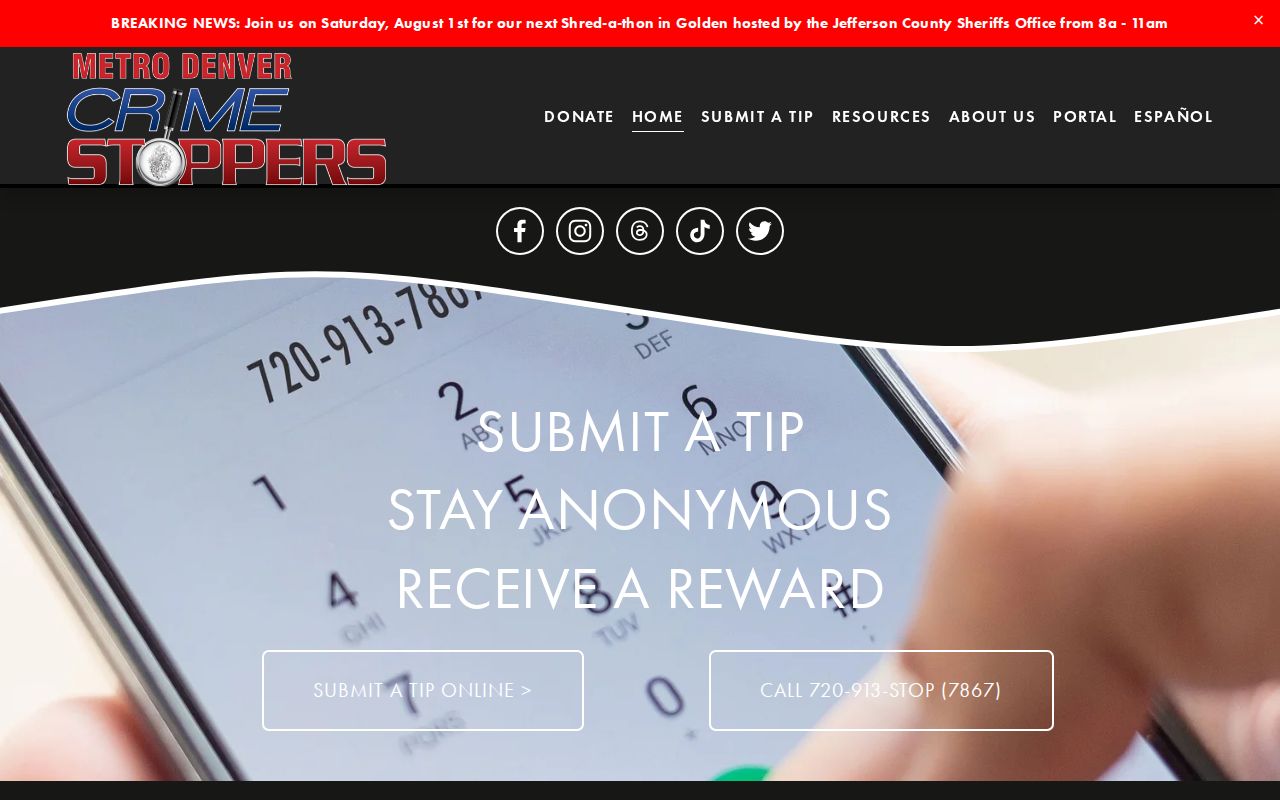
Familiarity helps you spot the official service. It is not a warrant search. The Spanish-language Crime Stoppers page explains the anonymous code and reward process for Denver County tips.
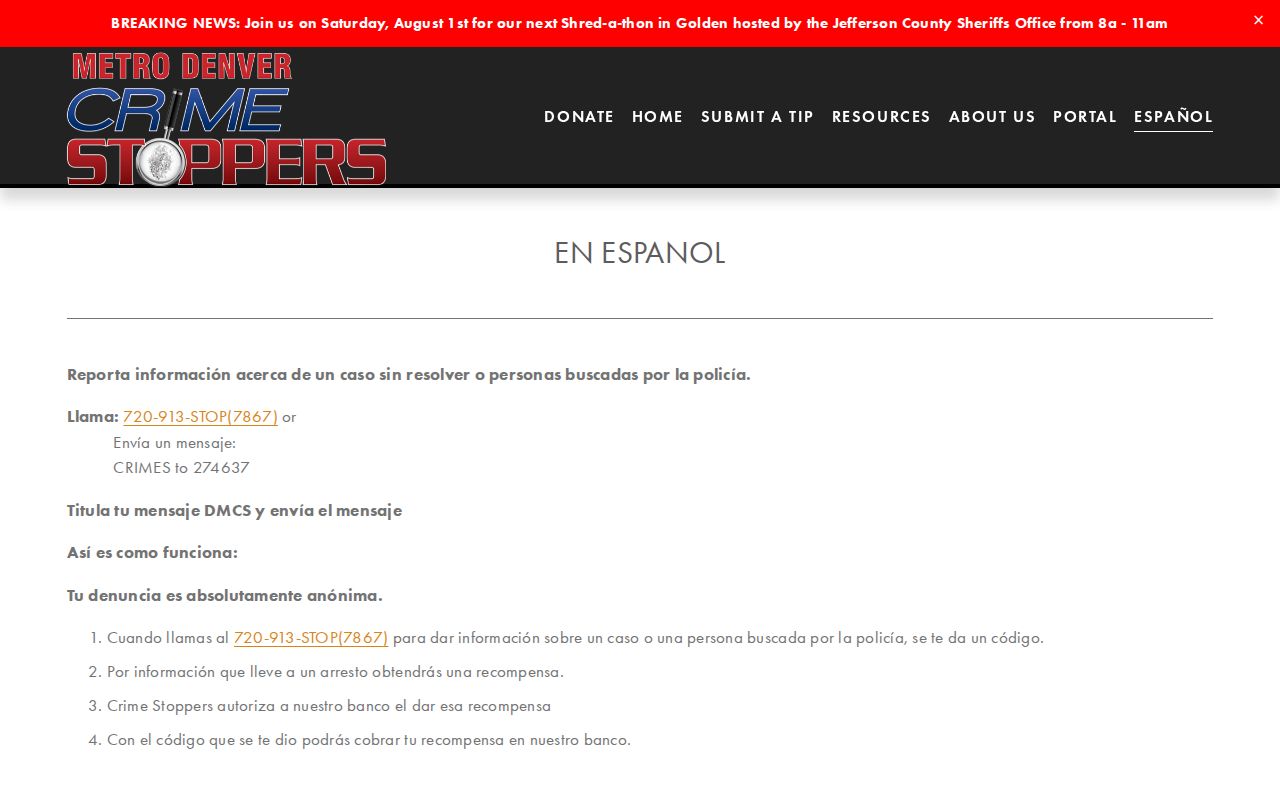
The wider interface makes tipping easier for Denver County residents without replacing court verification of a warrant.
Most Wanted vs an Active Warrant
The terms overlap in ordinary speech, but they answer different questions in Denver County.
| Point | Most-wanted program | Active warrant record |
|---|---|---|
| Purpose | Seek public tips on selected matters | Record enforceable court process |
| Coverage | Curated and incomplete | Broader, but split among courts and restricted systems |
| Custodian | Crime Stoppers or the featuring agency | Issuing court and authorized agencies |
| Status proof | Not by itself | Must be checked at the official source |
| Reader action | Report a tip safely | Contact the clerk or counsel about your own matter |
A feature can linger online after the facts change. An active Denver County warrant can just as easily exist with no feature at all, so a blank tells you nothing statewide.
Denver Court Status Stays Separate
Denver County runs four constitutionally separate local courts: County, District, Juvenile, and Probate. Federal matters sit in another system. A misdemeanor or municipal case lands in Denver County Court. A felony belongs in Denver District Court. Juvenile files carry strict access limits. A federal warrant never shows there. The County Court's Post Bond - Address Warrant route takes a name and date of birth or a case number. It returns only online-eligible matters. Quick search needs a case number or booking number. Docket search is just a hearing calendar, and the DSD custody search covers only current custody. Those limits keep a Denver County search from producing a false "no warrant" answer. For more, the Denver County active-warrants reference separates court records from restricted agency databases, and Colorado Judicial Branch access guidance warns that online access is limited and commercial results may not be official.
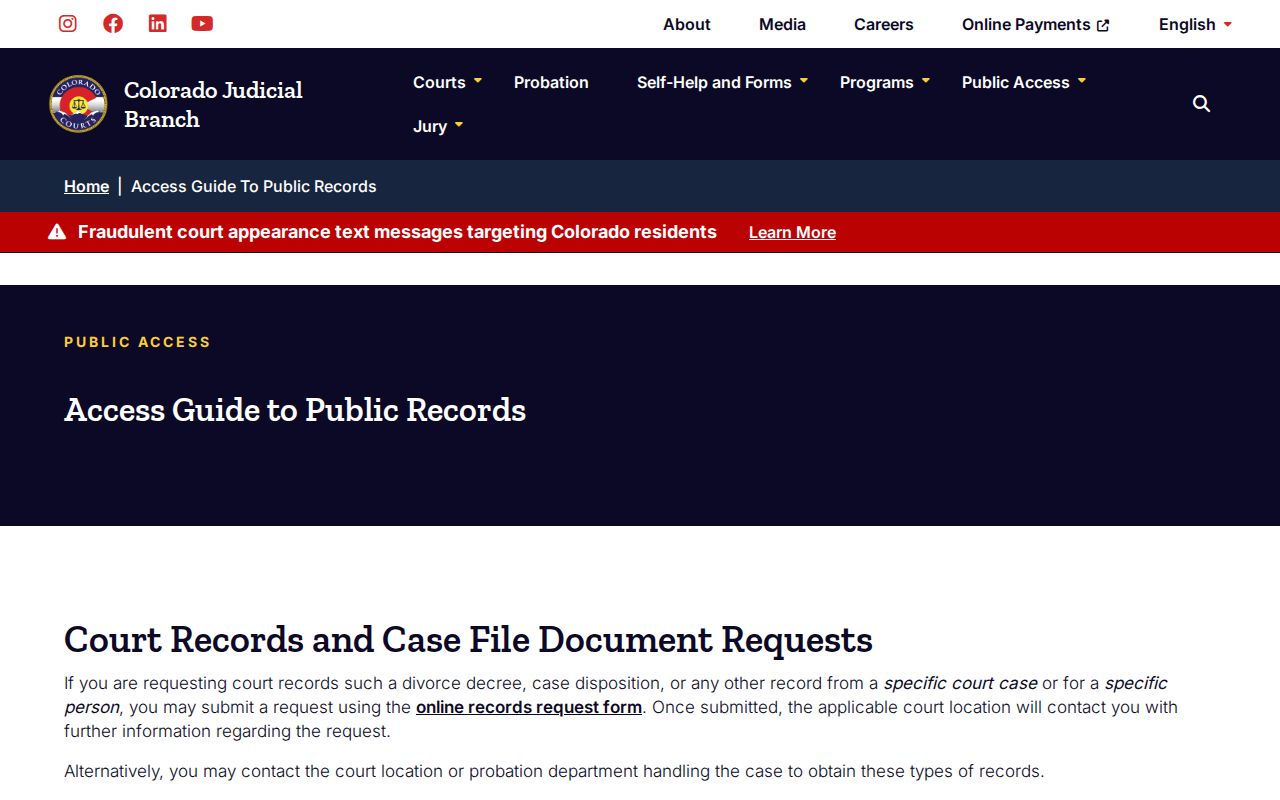
The state guide backs the same rule: confirm any claimed Denver County warrant with the court that keeps the record.
If You Believe You Are on a List
The tip line is the wrong door for your own warrant status. Denver County Court's criminal clerk routes municipal and misdemeanor matters, while Denver District Court keeps the felony docket. Reach an issuing clerk or a lawyer in Denver County only through a number published on the official court site. Denver County's Colorado State Public Defender office can explain its application path, though representation turns on appointment and eligibility.
- Save the official URL and date without copying a profile into social media.
- Confirm the court and case number through the clerk or counsel.
- Ask whether an appearance, bond, recall motion, or other judicial step applies.
- Keep every order, receipt, and next-hearing instruction.
Act carefully: Do not approach another listed person or evade service. For your own case, seek legal advice and official court instructions promptly.
Denver Warrant Scam Checks
Warrant scams run on fear: arrest threats, fake jury-duty claims, contempt, and failure-to-appear language supply the pressure. On October 15, 2024, Denver County Court, DSD, and Denver District Court issued a joint warning. Officials do not call to collect fines. They never demand warrant money by telephone. Nobody legitimate will tell you to wire money, bring cash to a store or street, or pay a caller-selected "10% bond." Read Denver County Court's warrant scam warning, then independently call the court's published number. Ignore caller ID. Ignore a badge number the caller supplies. Ignore links in unexpected messages. A genuine Denver County court issue can be checked through the court or counsel, without following a payment script. Denver County readers should scrutinize reposts of old wanted notices. A repost can drop the source date, skip a case update, or expose private data. Report a tip through the program, and leave public status claims to the agency or court that can verify them.